HISTORY
Here's the Lord's serva
Monastery of Santa Maria de Ermelo
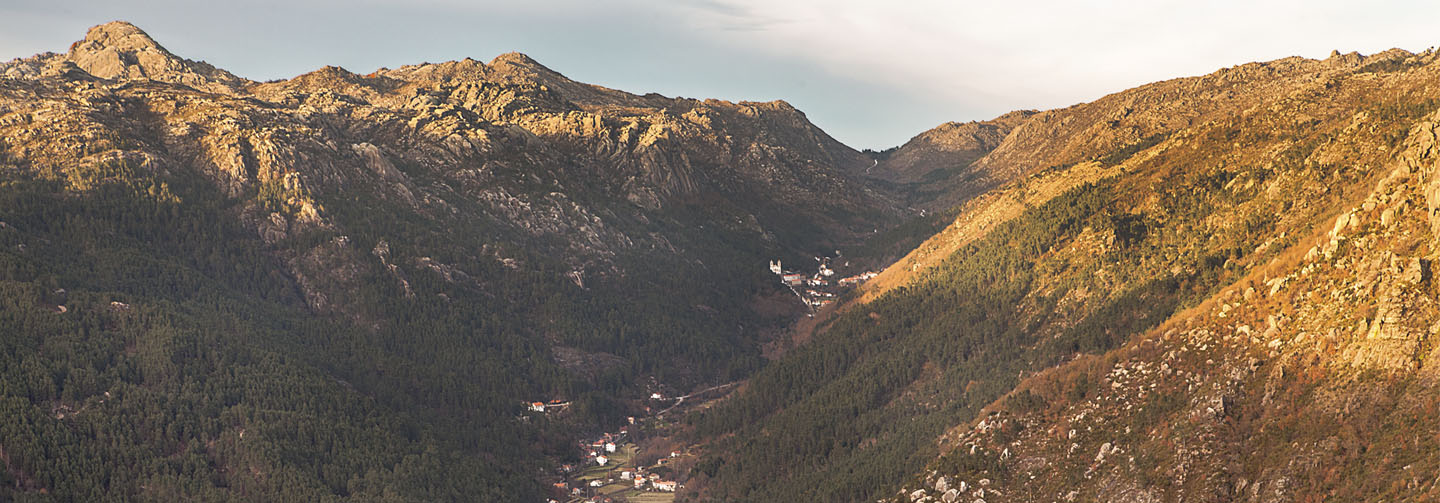
The foundation of the Monastery of Santa Maria de Ermelo is an unknown that history has not yet been able to unravel. However, the tradition of D. Teresa, mother of D. Afonso Henriques, who created this convent, prays. The first historical reference to the monument dates from 1220 (Inquiries of D. Afonso II), where it is stated that Queen Teresa gave her land of S. Martinho de Britelo, in Ponte da Barca, to the Monastery of Ermelo. There are, however, those who make further retreat in time the foundation of the monastery. According to some historiographic currents, it was the Benedictines who erected the monastery in the 12th century in the parish of S. Pedro dos Arcos, current parish of S. Pedro do Vale, moving it later to Ermelo.
In November 1441, the self of extinction and reduction of the monastery is consigned to the parish church. However, the situation must have been maintained for a short time, because only a few years later documents with references to the monastery appear, among which one of particular interest, dated 1497, in which King Manuel I confirms all the honors, mercies and privileges granted by his predecessors. In 1553, after a visitation of the Abbot General of the Order, he was ordered to close, but only later did the Abbot of Ermelo give up the Monastery in favor of Alcobaça, leaving the assets attached to the University College of S. Bernardo de Coimbra. However, a letter of confirmation from Francisco Barreto Meneses is known as abbot of the monastery (1632), which leads to the belief that extinction had no effect.
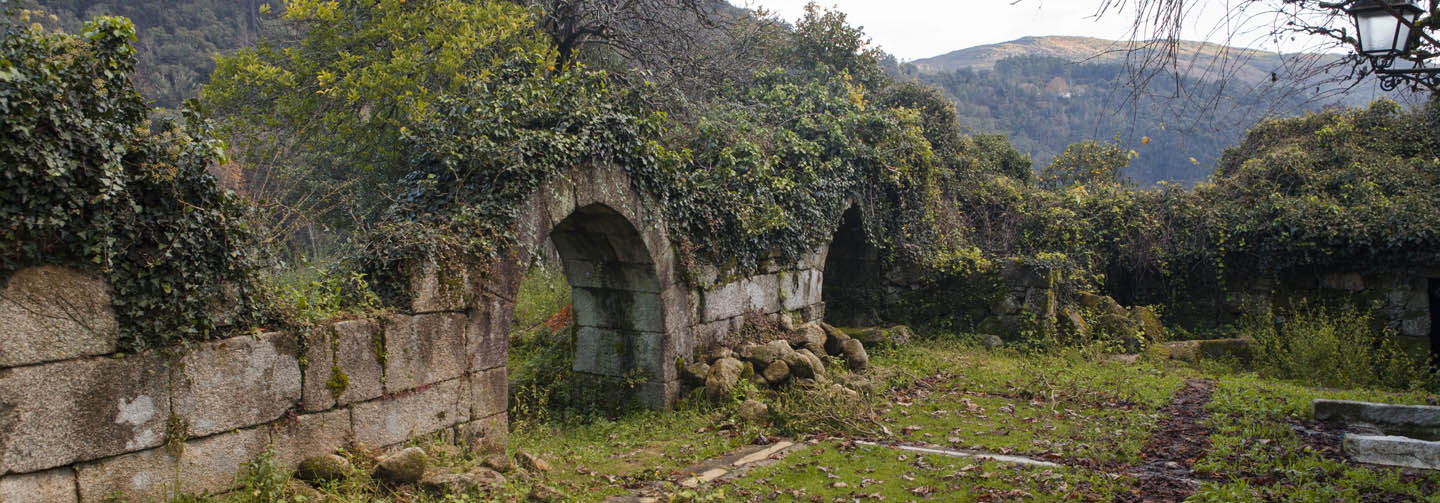
In 1754, the visitor Marcelino Pereira Cleto complained about the poor state of conservation of the entire building, ordering its restoration. It is at this time that the church is reduced from three to one nave, and the south wing was demolished in 1760. It is also in this eighteenth century that the parish house, the sacristy and the bell tower are built.
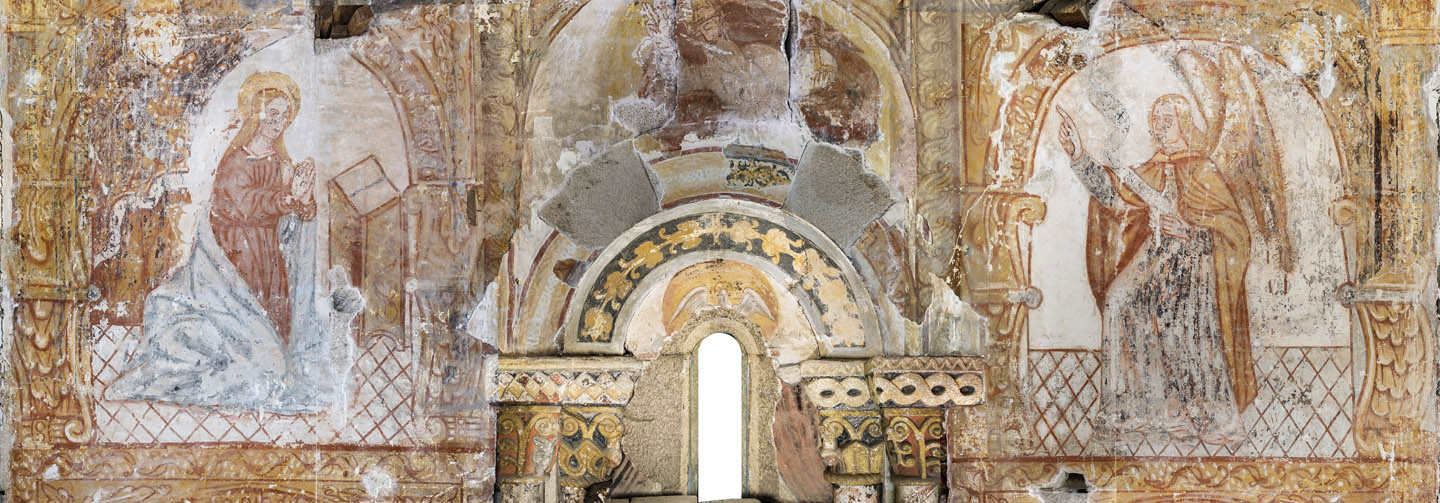
Mural of the Church of Santa Maria de Ermelo
The church has a set of frescoes of great artistic quality, discovered in 1996. Until this date, it was known only of its existence by a note dated 1706, where Father Carvalho da Costa gave account of the frescoes of the chapel representing the Virgin Mary and St. Benedict. The conservation and restoration intervention allowed the systematization of three painting campaigns, corresponding to moments of execution chronologically distinct, referring to the oldest in the first half of the century. XVI, according to Luís Urbano Afonso. The composition has a similar layout in the different campaigns - three records separated from each other by bars and friezes. The most recent were executed on the primitive fresh painting. Joaquim Caetano tells us that these frescoes are from the production of the Workshops of the Master of Valença and Master Arnaus.
Legend of the Foundation
It is said that King Ordonho II, governor of Asturias and all the southern territories conquered from the warriors of Islam, had a daughter named D. Urraca who was pious, protector of churches and convents, devotedly dedicated to the dissemination of the Christian faith. One day, Don Urraca decided to found a monastery for friars in a fertile place, surrounded by good waters, where there was a place for meditation, vineyards and trigais that would provide bread and wine for the Eucharistic Mystery.
With her father's consent, the princess left accompanied by her aias and some soldiers, having arrived at Serra da Peneda, where she found that there was silence for prayer and a wide view of a peaceful landscape. Then, began to climb the mountain, stopping in some places to rest, there is still today the place of Bouça das Donas, where he will stop to rest and contemplate everything that surrounded her. Already next to the village of Soajo, he found the appropriate space for the building of the Monastery and, therefore, hired the masons to open the foundations.
Happy, Don Urraca returned to her father's court to tell him the news. Curious, Ordonho II asked him what was seen from those times. The princess who saw the towers of the See of Braga and the house of the city was seen to the south; to the north, the cathedrals of Tuy and Ourense; to the west, the beaches; for this, fields and hills without account. The king heard and, after reflecting, told Don Urraca that, although he liked to satisfy his will to serve God, he could not spend half his kingdom in this Monastery, considering that horizon too great.
Thus, Ordonho II ordered the princess to find another less large place for the construction of the Monastery. Sad with the decision, D. Urraca decided to have the Monastery built, not at the top of the hill, but in the depth of the valley, by the river, in the midst of the mists, caught in the solitude of the smite. And so he called it the Monastery of Ermelo.
Adaptation of the text by António Manuel Couto Viana, in the book "Lendas do Vale do Lima", in an edition of Valima – Association of Municipalities of vale do Lima, in 2002, p. 77-79.